What Is Building Automation - and How Do You Learn It?
Building automation is the technology that makes modern buildings run efficiently. It's the system that adjusts your office's temperature without someone touching a thermostat, that dims lights when a room is empty, that alerts a technician before an HVAC unit fails.
And it's one of the fastest-growing skilled career fields in the country.
What Building Automation Actually Does
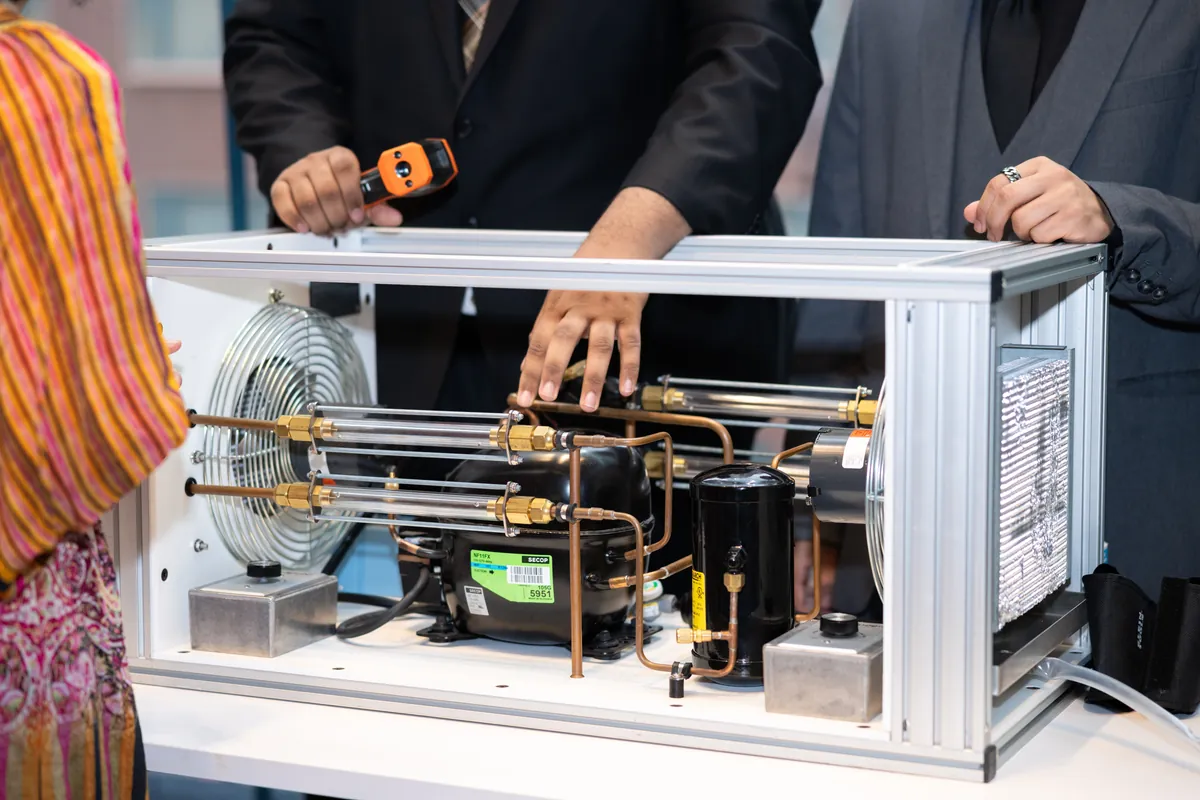
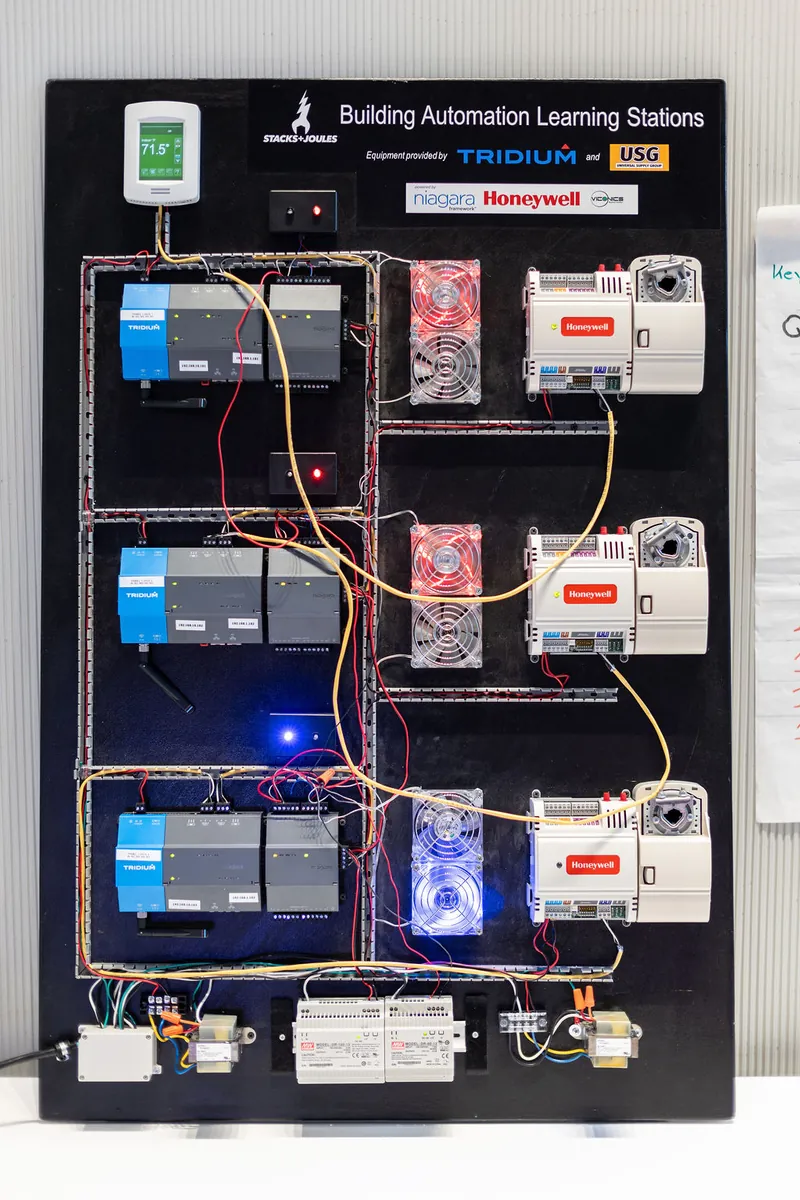
A BAS (building automation system) is a network of sensors, controllers, and software that monitors and manages a building's mechanical and electrical systems:
HVAC - Reads temperature sensors, occupancy data, and outdoor conditions and adjusts heating and cooling accordingly.
Lighting - Adjusts brightness based on time of day, occupancy, daylight levels, and scheduled programming.
Air quality and ventilation - CO₂ sensors, humidity monitors, and fresh air systems all feed into the BAS.
Energy monitoring - Tracks energy consumption at a granular level, flagging waste and informing efficiency decisions.
Integration - In large commercial buildings, the BAS integrates with fire systems, security, access control, elevators, and more. Niagara N4 is the most widely used integration platform.
What Building Automation Professionals Do
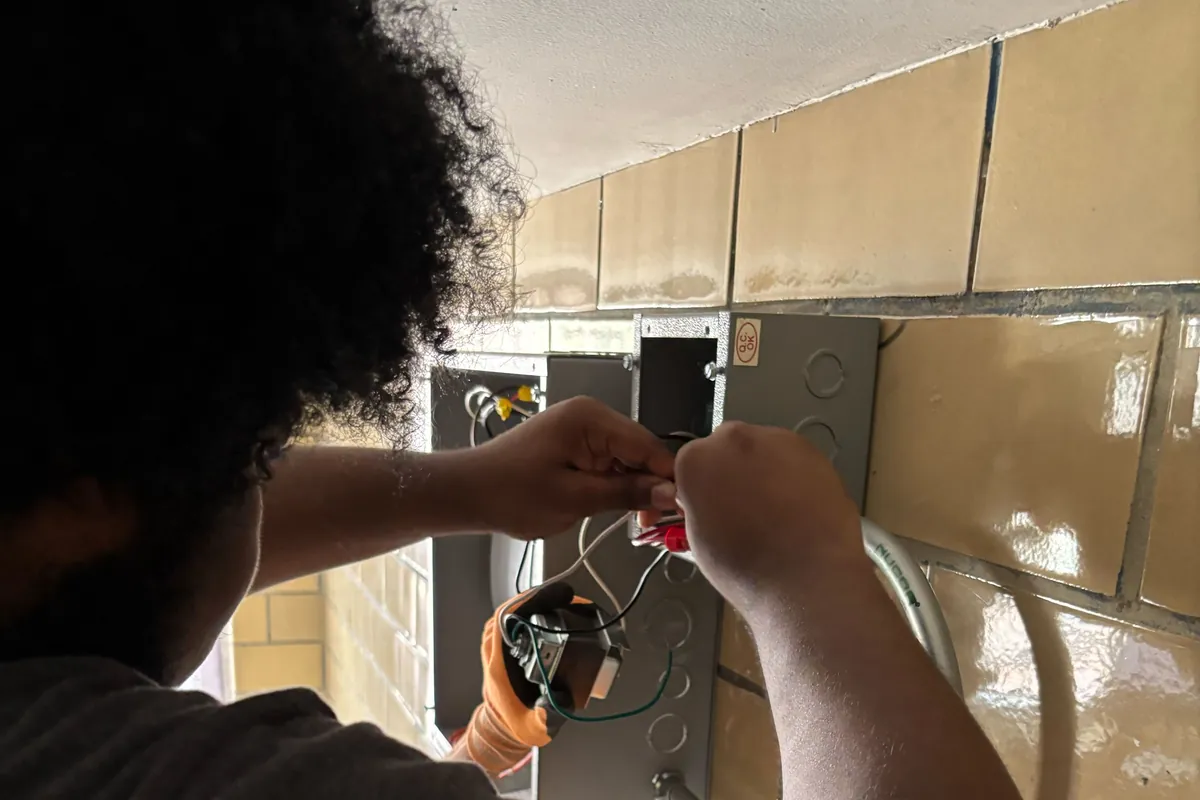
Field technicians install and maintain physical hardware - sensors, dampers, controllers, wiring. They troubleshoot systems and work with low-voltage electrical systems.
Programmers and commissioning technicians work at the software layer - configuring Niagara or similar platforms, testing systems against specifications.
Energy analysts use building data to identify performance issues and model efficiency improvements. This role is growing fast as FDD tools become standard.

The Skills You Need to Learn
Electrical and mechanical basics - Low-voltage wiring, how HVAC systems work, how to read schematics.
Controls logic - How to think about sequences of operation: if the temperature exceeds X, trigger Y.
Networking and IT - Basic network literacy - subnets, IP addressing, BACnet and Modbus protocols. People with tech backgrounds have a natural edge here.
Platform software - Niagara N4 (from Tridium/Honeywell) is the dominant platform. Other platforms include Distech, Automated Logic, Johnson Controls, and Siemens.
Documentation - Bad documentation costs contractors real money. Documenting your work clearly is valued more than most people expect.
How to Actually Learn It
Free, Structured, Employment-Focused: Stacks+Joules
The most direct path for people starting from zero is Stacks+Joules in New York City. The 14-week curriculum covers Python for building systems, LCA EE101 certification, HVAC and air handling, Niagara N4, low-voltage wiring, networking, EPA 608, and professional development.
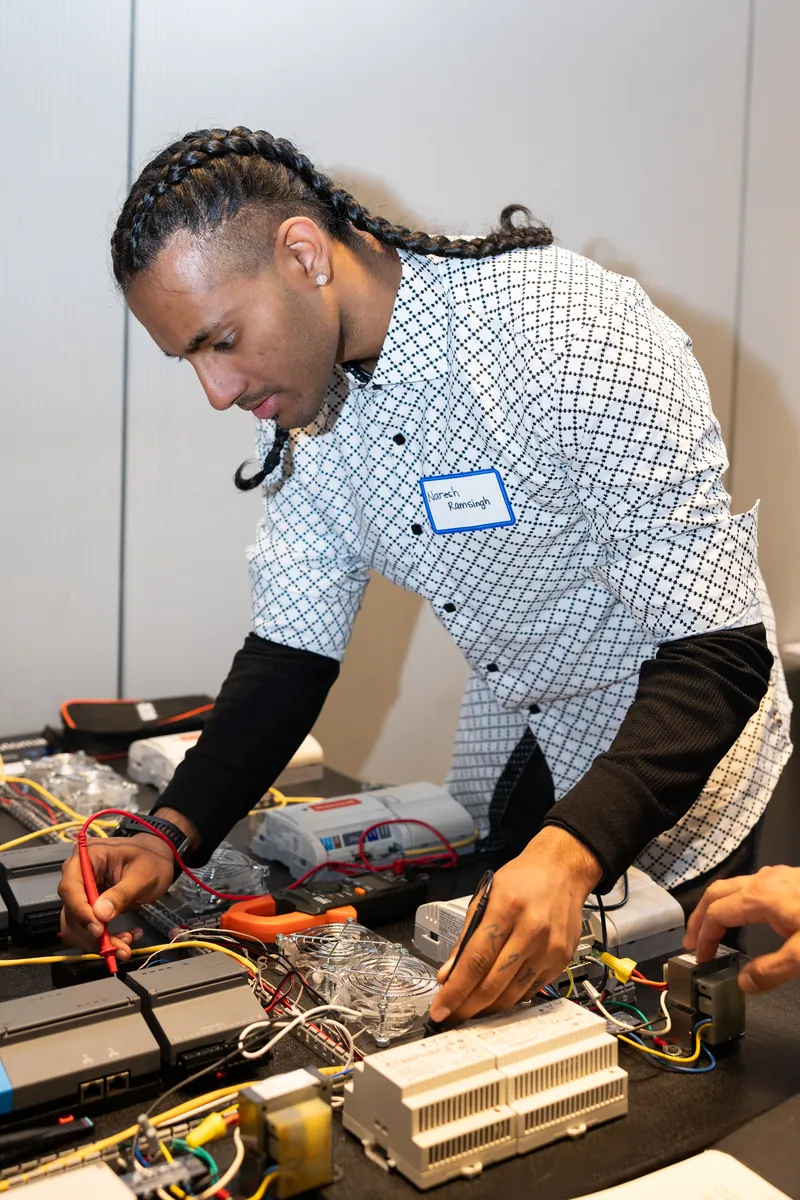
Training uses real equipment - actual controllers, sensors, dampers, and building management systems. The Henry Street Settlement building on the Lower East Side is a living lab. After training: an onboarding pipeline with a partner employer. After that: job placement support. Free, ages 18–24.
Vendor Training Programs
Siemens, Trane, Johnson Controls, and Automated Logic run platform-specific programs. Valuable for deepening expertise but require existing BAS foundation first.
Community College Programs
Some community colleges offer HVAC/building technology programs that touch on BAS. Quality varies - research what local employers think before enrolling.
On-the-Job Learning
Starting at an HVAC company and migrating into controls over time. This works but is slow and unstructured.

Why Building Automation Is Worth Pursuing
This isn't a pitch. It's arithmetic. Local Law 97 requires large NYC buildings to cut emissions significantly. The existing BAS workforce is aging. A motivated person who gets real BAS training in 2025 or 2026 is entering a market where the demand is structural - not cyclical.
Apply at henrystreet.org/bast - free program, ages 18–24 in NYC →